

Making space for different mediums
There is only a small percentage of people who, by their customer experience, are naturally drawn towards textile art. Usually, when people have a white wall and want to put something on it, they first think of a painting, a print or a photograph. Of course, these things also have a price gap – prints often go for much less than original paintings or tapestries. But I’m not actually here to talk about that.
What I find fascinating is how different art forms are often pitted against each other, while they can be so fundamentally different in what they bring into a space. A painting, a print and a tapestry don't necessarily have to compete for the same spot. I actually think they can all fit on one wall, when curated well. Not only fit, but complement each other and create more overall interest.
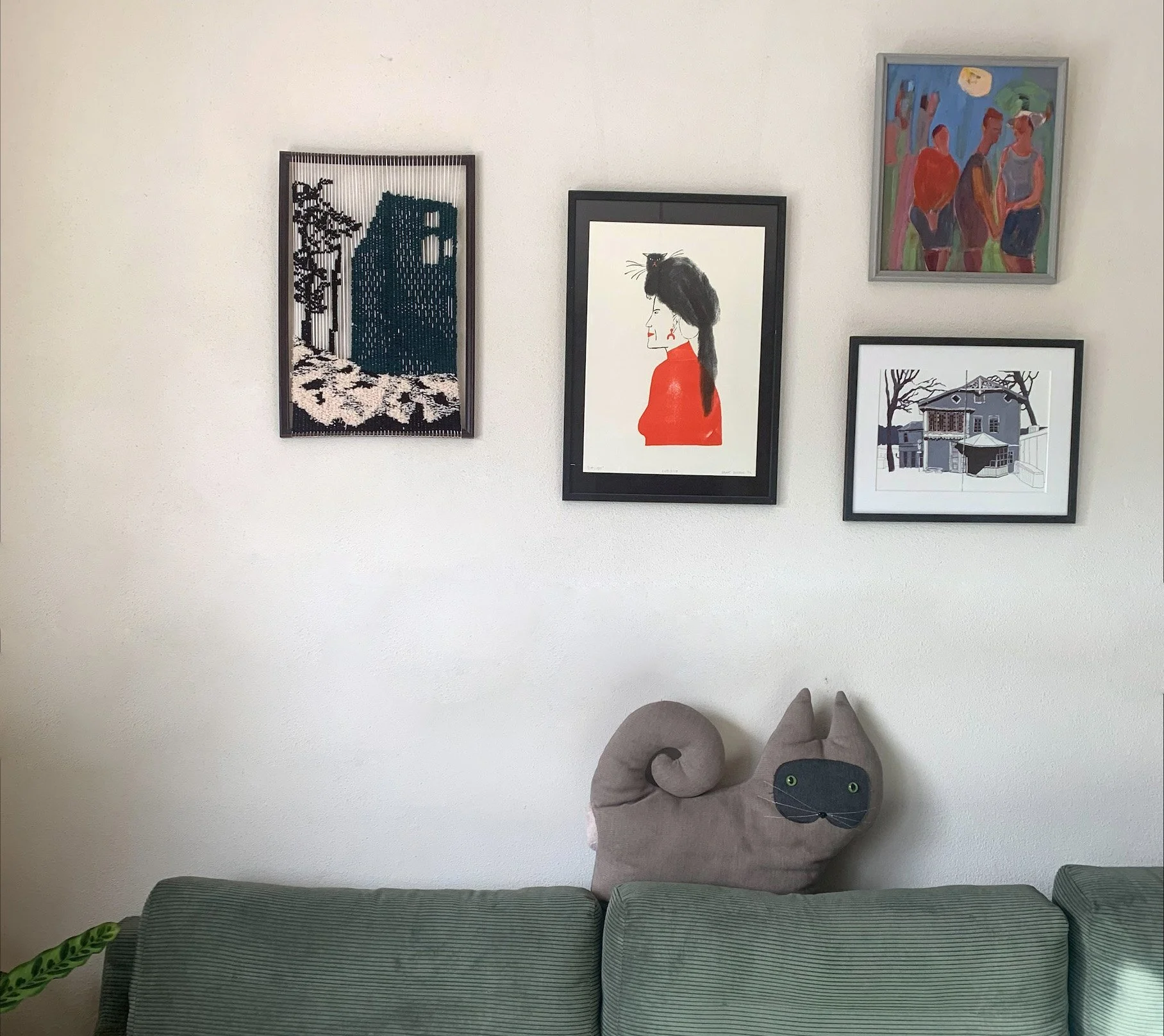
Photo from a customer, tapesty on the left
A tapestry can bring texture next to one dimensional art piece. A small print can create some breathing room next to a larger, more dominant piece. A painting can bring canvas while another work brings tactility. Suddenly, the wall becomes less about one individual artwork and more about the relationship between the pieces and the room.
And I think curating different kinds of artworks together is also quite practical. It gives you more opportunities to freshen up your living space without making drastic decisions. You can switch the places of the art pieces, move something to another wall, change which piece becomes the focus.
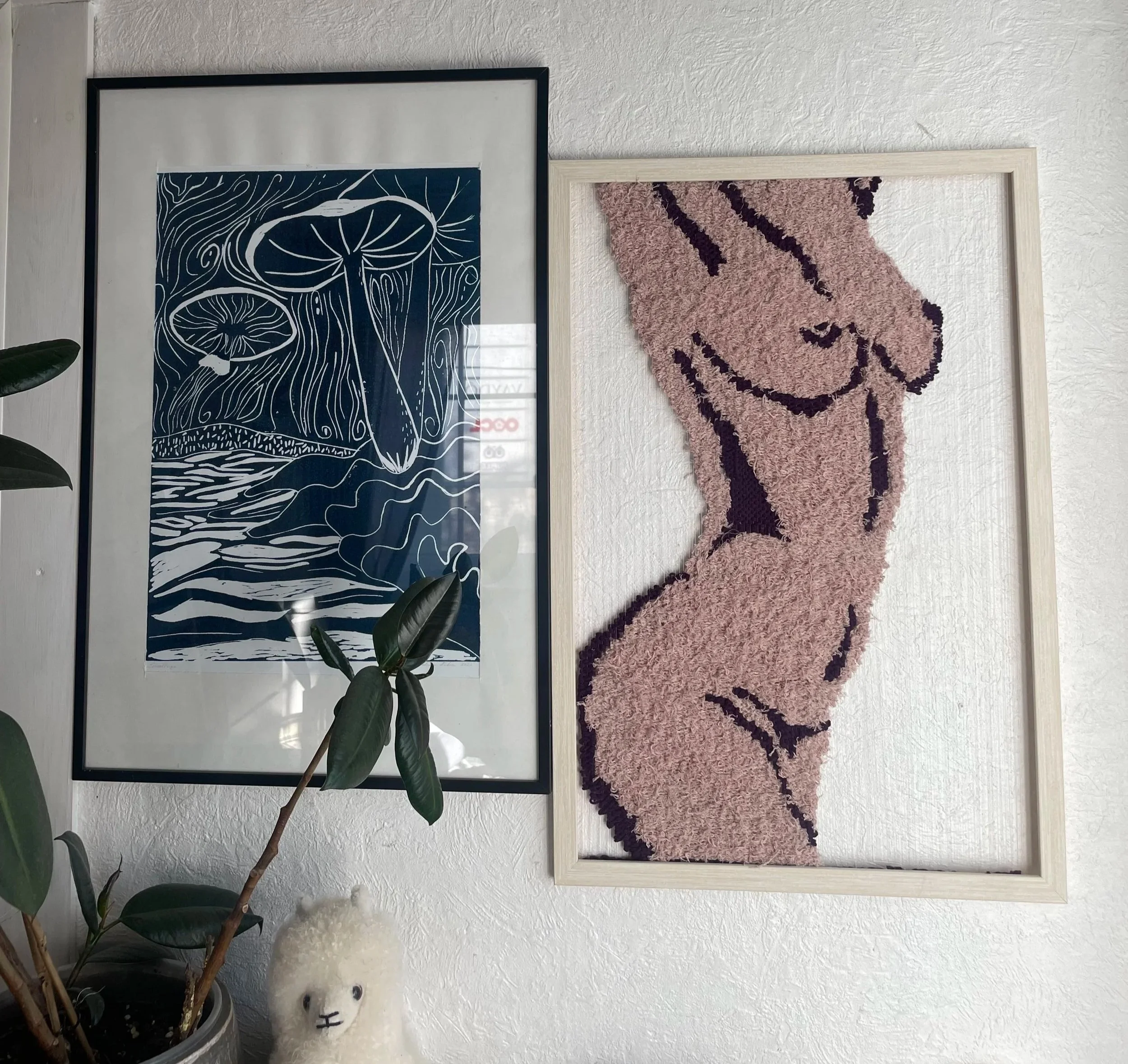
There is absolutely a charm in having one big artwork that takes the stage, but especially in smaller apartments, it can also be quite limiting. If everything is chosen around that one central piece, even a small change can suddenly disrupt the whole harmony. Change the artwork and suddenly the interior don't make sense anymore, or the scale feels wrong, or the rest of the room starts feeling strangely disconnected.
But if you build the space around smaller, diverse details instead, I think it becomes much more flexible. Different colours, textures, shapes and materials can echo each other without everything having to directly match. Then, when you bring something new into the space, there are already several points of connection for it to find.
